40 Questions to Ask in an Informational Interview
The best informational interview questions, grouped by topic: their career path, the day-to-day work, the industry, advice for you, and how to close.
This article contains affiliate links. If you buy through them, Career Hub may earn a commission at no extra cost to you. How we make money.

An informational interview is a short conversation with someone who does work you’re curious about. You’re not asking for a job. You’re asking how they got where they are, what the work is really like, and what they’d do in your position. Done well, it’s one of the most useful hours in a job search or a career change.
The quality of the conversation depends almost entirely on your questions. Below are 40 informational interview questions, grouped by topic, plus how to choose the right ones and what to do afterward.
How to use these questions
You won’t ask all 40. A typical informational interview runs 20 to 30 minutes, which is enough for six to ten good questions with real answers. Pick a few from each section that matter most to you, put them in order, and keep the rest as backups in case a topic runs out quickly.
Research the person first. Read their LinkedIn profile, look at anything they’ve written or presented, and skip any question their profile already answers. “What’s your background?” wastes time you could spend on “What made you move from consulting into a product role?”
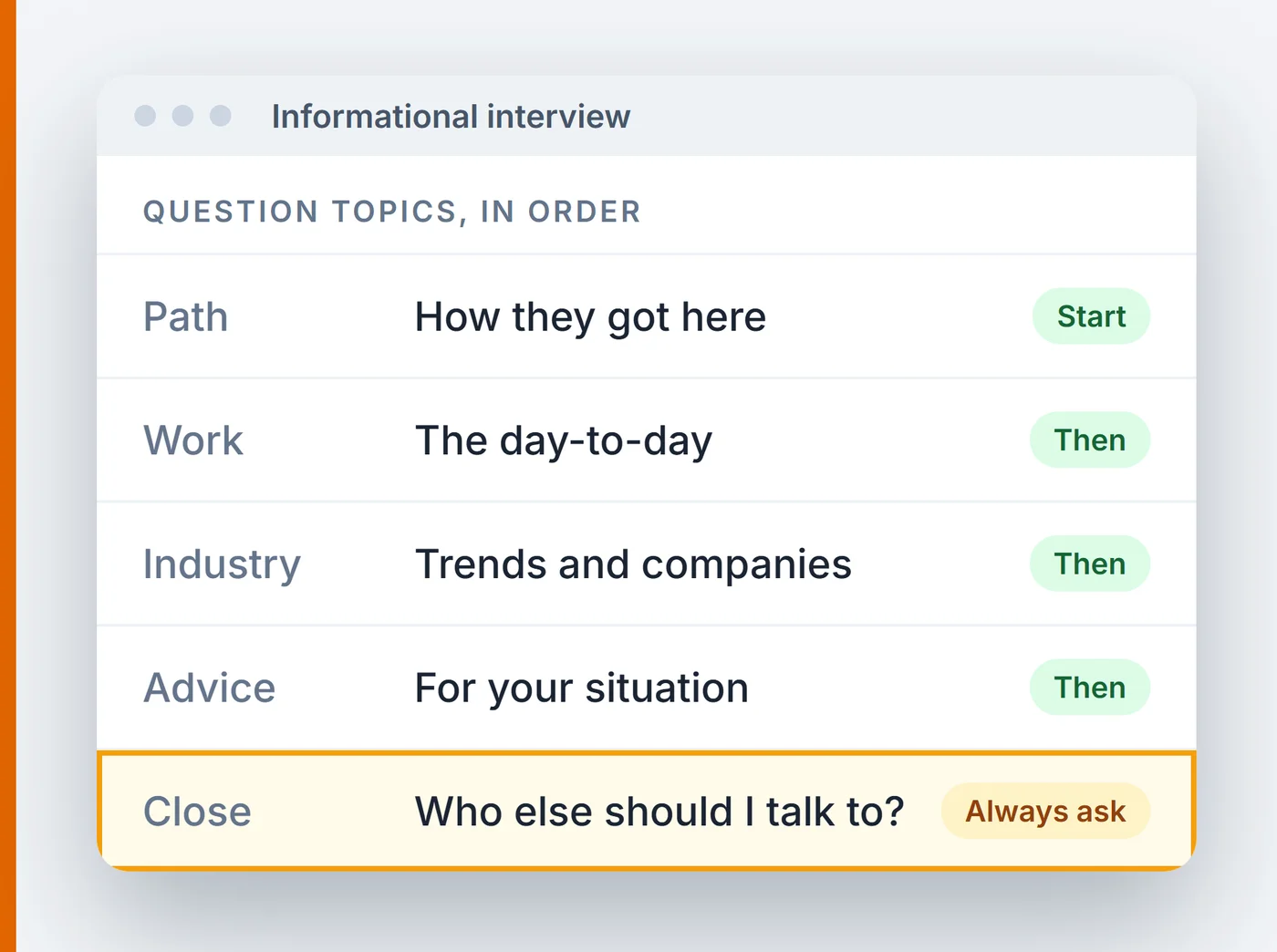
Start broad and personal (their path), move to the specifics (the work and the industry), then end with advice and next steps. That order feels natural and leaves the most useful questions for when the conversation has warmed up.
Questions about their career path
- How did you get started in this field?
- What drew you to this kind of work?
- What did your path to this role look like, and what would you do differently?
- Was there a job or decision that turned out to matter more than you expected?
- What surprised you most when you moved into this role?
- What skills or experience made the biggest difference in getting where you are?
- If you were starting your career again today, what would you do first?
Questions about the day-to-day work
- What does a typical week look like for you?
- Which parts of the job take the most time?
- What do you enjoy most about the work, and what do you find hardest?
- Who do you work with most closely, inside and outside your team?
- What separates people who do this job well from people who struggle with it?
- What’s something about this role that people outside it often misunderstand?
- Which tools or software do you use most?
Questions about the industry and company
- How has your field changed since you started, and where do you think it’s heading?
- What trends or challenges are people in your industry talking about right now?
- Which companies or teams are known for doing this work well?
- How does your company’s culture compare with others you’ve worked at?
- How do people usually move up or across from your role?
- What kinds of roles are hardest to fill in your field right now?
- Are there professional groups, events, or publications you’d recommend following?
Questions about breaking in or moving up
- What do hiring managers in your field look for in candidates?
- What experience would make someone like me a strong candidate?
- Are there entry points into this field that people often overlook?
- Which skills should I focus on first, given my background?
- Are there certifications or courses that are genuinely worth the time?
- How important is a specific degree, compared with experience?
- What do you wish more applicants understood about this kind of role?
Questions asking for advice on your situation
Give them a sentence of context first: “I’ve spent three years in retail management and want to move into operations.”
- Based on what I’ve told you, what would you focus on in the next six months?
- Is there anything in my background that you think would help, or hold me back?
- How would you describe my experience to someone in your field?
- If you were in my position, would you look for a job like yours now, or build experience somewhere else first?
- Are there types of companies where someone with my background tends to do well?
- What’s one mistake you see people make when they try to move into this field?
Closing questions
- Is there anyone else you think I should talk to?
- Would it be all right if I mentioned you when I contact them?
- Are there any resources, articles, or books you’d recommend?
- Is there anything I didn’t ask that you think I should know?
- What’s the best way to stay in touch with you?
- Is there anything I can help you with?
Question 35 is the most valuable one on the list. One good conversation can turn into two or three more, each with someone who’s already been told who you are.
Questions to avoid
- “Can you get me a job?” or “Are you hiring?” It turns a conversation into a pitch, and it breaks the promise you made when you asked for their time. If they have an opening and think you fit, they’ll mention it.
- Anything you could answer with a quick search. The company’s founding date, what the product does, or their job title.
- Salary questions in the first conversation. Ask about pay ranges in the field generally if it matters to you, not about their own salary.
- Too many yes-or-no questions. Open questions (“What,” “How,” “Why”) get the stories and specifics you came for.
How to run the conversation
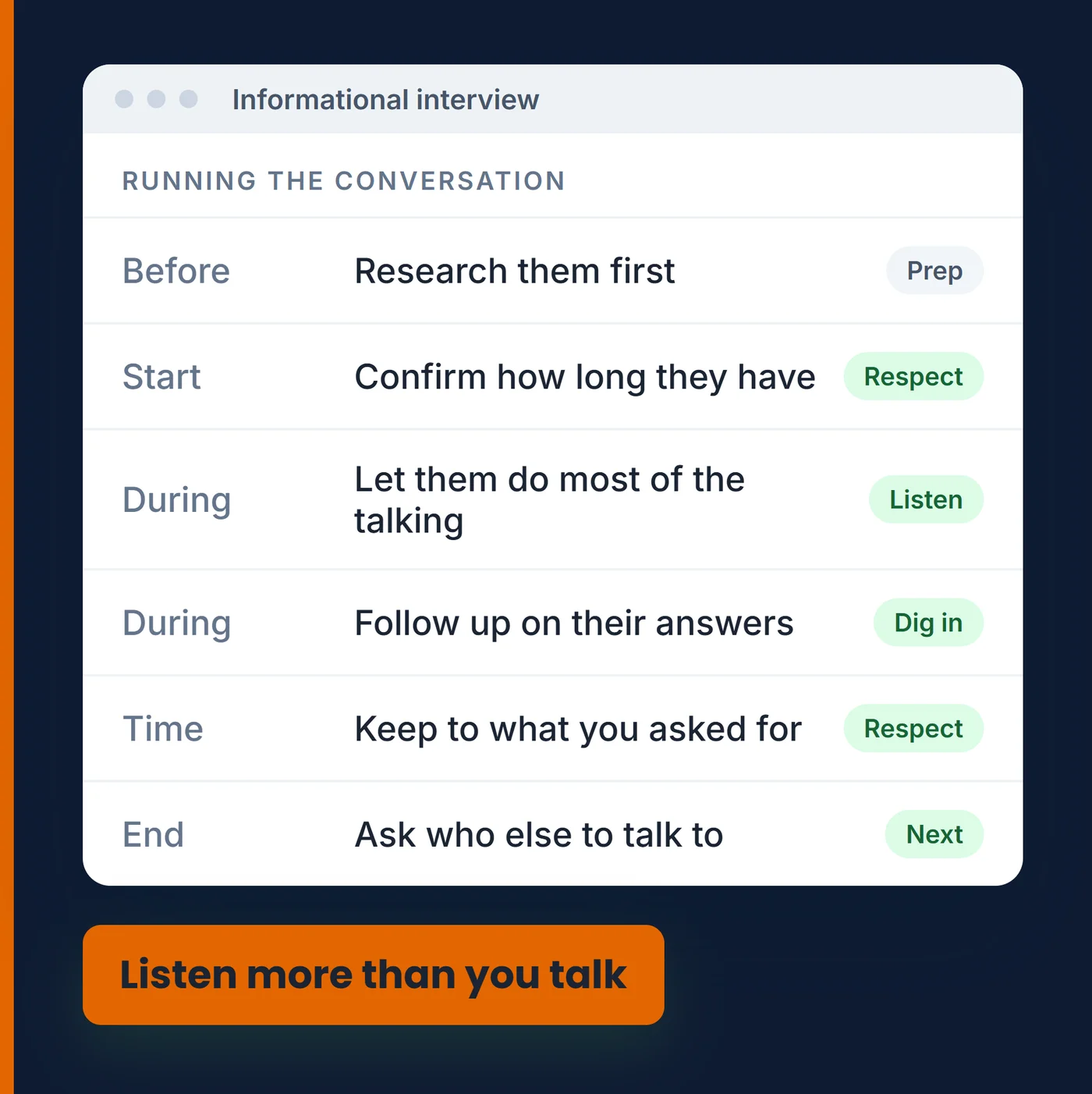
Arrive a few minutes early, or join the call early if it’s virtual. Thank them, remind them in one sentence why you reached out, and confirm how much time they have. Then let them talk: you’re there to listen and learn, so aim for them speaking most of the time.
Take brief notes, and follow up on what they say rather than racing through your list. “You mentioned the move into product was a surprise. What made it work?” is often better than your next prepared question.
Watch the clock. When you reach the time you asked for, say so and offer to wrap up. They’ll often choose to keep going, but it should be their choice.
After the informational interview
Send a thank-you email the same day. Mention something specific you learned, and say what you plan to do with it.
Subject: Thank you for your time today
Hi [Name],
Thank you for taking the time to talk with me today. Your advice about [specific point] was especially helpful, and I’m going to [action you’ll take, for example look into the certification you mentioned]. I’ll also reach out to [person they suggested], as you recommended.
I really appreciate your help, and I’ll let you know how things go.
Best, [Your name]
Then keep your promise: a few weeks or months later, send a short update on what you did with their advice. It’s the easiest way to turn one conversation into a lasting contact.
If you haven’t asked anyone yet, our guide on how to network for a job includes an informational interview request email you can adapt.
Further reading
The 2-Hour Job Search by Steve Dalton (third edition) covers informational interviews in detail, including how to choose who to contact, how to write a short request email, and a simple framework for structuring your questions so the conversation produces useful advice.